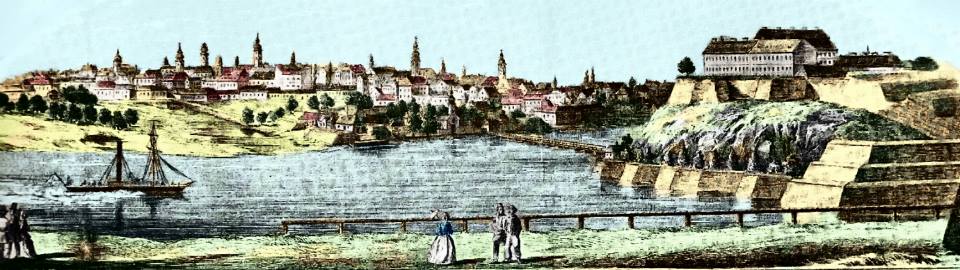
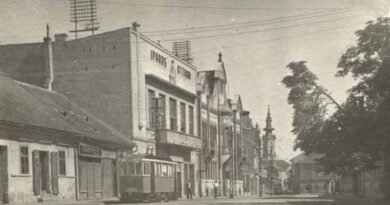
HOW NOVI SAD ACQUIRED THE RIGHTS OF A FREE ROYAL CITY ON 1 FEBRUARY 1748
The process of transforming Petrovaradin Šanac into a free royal city was long and complex. It did not involve only a change in the legal status of a settlement, but also its separation from the previous military and chamber administration, the determination of the territory of the future city, the resolution of property and financial matters, the relocation of the army, and the choice of a new name and coat of arms.
After the border guards had been heard, a mixed commission met on 15 August 1746. Its members included representatives of the military, county and chamber authorities: on behalf of the army, Baron Engelshofen, lieutenant field marshal, and the military envoy Reuber; on behalf of Bács County, Deputy County Prefect Adam Čupor; and on behalf of the chamber authorities, Franjo Redl, imperial administrator of estates.
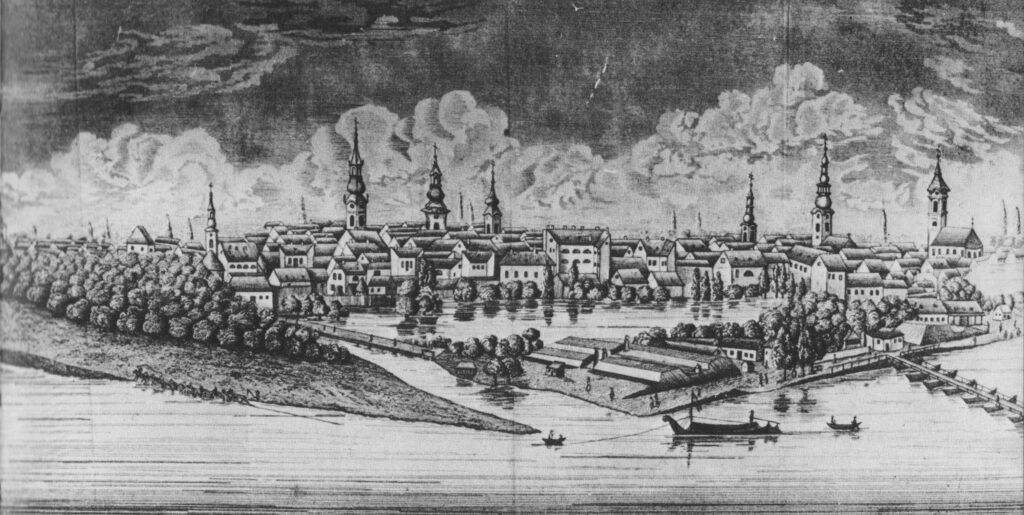
The commission held its sessions in Petrovaradin Šanac. It first carried out an on-site inspection, after which the military and civil members of the commission reached an agreement on financial and property matters, as well as on the relocation of the army. Particular attention was paid to the bridgehead on the left bank of the Danube. Since it formed part of the defensive system of the Petrovaradin Fortress, it was exempted from civil jurisdiction and remained under military administration.
During the official handover of Petrovaradin Šanac, the delimitation of the territory was also carried out. State-owned deserted lands and dwellings within the town’s territory were recorded. Franjo Redl, as administrator of state estates, conducted official surveys and questioned the population. On the basis of these statements, he compiled a report on the territory of the future free royal city and submitted it to the Hungarian Royal Court Chamber.
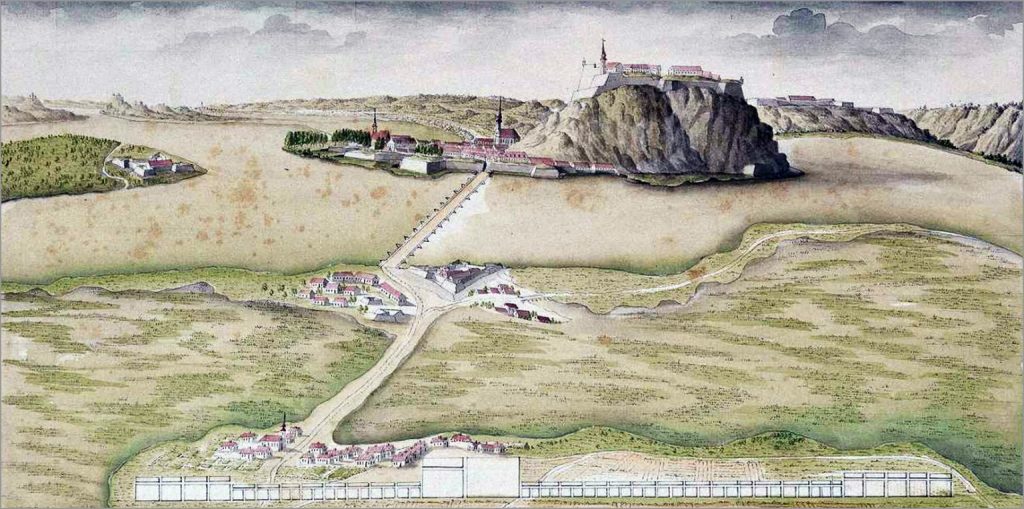
During the delimitation, it was established that Petrovaradin Šanac, that is, the future free royal city, included the deserted lands of Zajol – Sajlovo, Mortályos – Mrtvaljoš, Kamendin – Keménd, Rivica and Čenej – Cheme, as well as Šanac itself, on whose territory the city stands today, together with the Dunatel farmstead and a part of the land that the Futog estate had previously appropriated arbitrarily.
Once the territory of the new city had been determined and the redemption sum of 80,000 Rhenish forints had been paid into the state treasury, the question of its name arose. The old name, Petrovaradin Šanac, no longer corresponded to the new position of the settlement. It recalled military dependence and did not designate an independent urban municipality. It had already been unsuitable in relation to the civilian population, and especially so after the border guards also came under civil authority.
For this reason, a new name was sought for the city. In December 1747, a delegation from Petrovaradin Šanac went to the Hungarian Royal Court Chancellery with a request that the town should no longer be called Petrovaradin Šanac, but should receive the name Bačvar or Dunavar. In addition, the municipality requested that two more annual fairs be approved in addition to the existing two, and that a forum for judicial appeals be determined.
The request was considered in the Court Chancellery on 26 January 1748. The Chancellery acknowledged that the existing name, which indicated military dependence, could by no means be retained after the settlement passed under civil administration. It was proposed that the new city should be called Dunavar, Vodeno Naselje or Újvidék, that is, Novi Sad. Maria Theresa, however, wrote in her own hand on the submission of the Court Chancellery: “nominatur Neoplanta” — let it be called Neoplanta.
Thus the question of the name of the new free royal city was resolved. By the royal charter of 1 February 1748, the old name Petrovaradin Šanac was abolished, and the city was given a new name: NeoPlanta, in Hungarian Újvidék, in German Neusatz, and in Serbian Novi Sad.
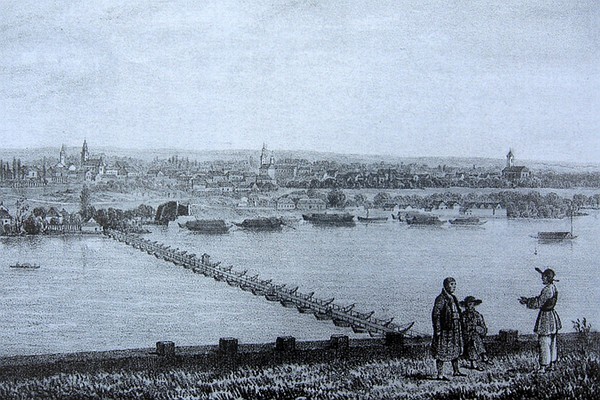
The granting of the status of a free royal city was also connected with the broader political and financial circumstances in the Habsburg Monarchy. The wars waged by Maria Theresa had emptied the state treasury, so the queen sought assistance from the provincial authorities and her subjects for the continuation of the war. The inhabitants of Petrovaradin Šanac offered the queen 80,000 Rhenish forints. This sum represented one of the important legal grounds for acquiring the rank of a free royal city.
In the charter of privileges, the queen referred in complimentary terms to the merits of the inhabitants of Petrovaradin Šanac. It was emphasized that in earlier times they had taken part in the wars against the Turks, and in more recent times had assisted in the wars fought against Prussia, France and other states. It was especially stressed that, as proof of their loyalty, they had paid the sum of 80,000 Rhenish forints into the royal treasury for the needs of the wars.
Maria Theresa stated in the charter that the Petrovaradin chamber town was being elevated to the rank of a free royal city in order to reward the loyalty and merits of its inhabitants, but also to encourage the development of trade, increase the number of inhabitants and taxpayers, revive commerce and the transport of agricultural products, and create an important commercial centre in that part of the country.
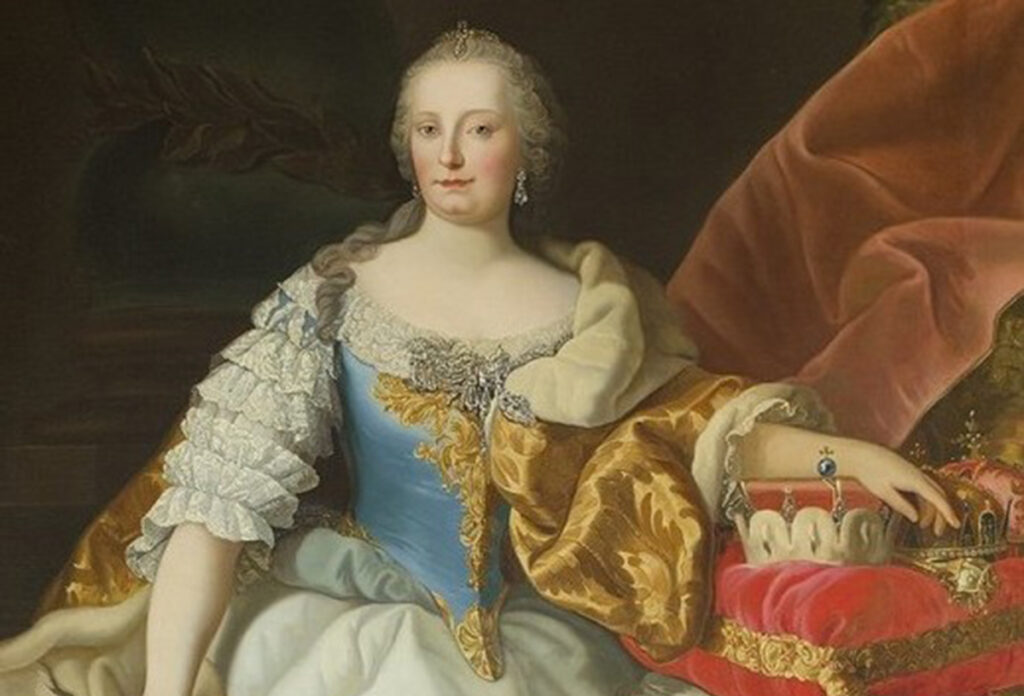
The military importance of the city was also particularly emphasized. The more populated and developed the place became, the more assistance it could provide in times of possible wars to the imperial army and to the nearby Petrovaradin Fortress. For this reason, the elevation of Petrovaradin Šanac to a free royal city had economic, administrative and strategic significance at the same time.
Petrovaradin Šanac acquired the rights of a free royal city for several reasons. Its inhabitants had participated in wars as border guards, and later the citizenry contributed 80,000 forints to war expenses. The city already had developed trade and crafts and represented one of the liveliest trading centres in Bács County, connected also with Syrmia. In addition, its position in the immediate vicinity of the Petrovaradin Fortress gave it particular military importance.